We Expect Managers to Drive Change — But We Don’t Prepare Them For It
Organizations rely on managers to deliver change, but rarely equip them for the human side of it. Here’s where most change efforts quietly fall apart.
Organizations rely on managers to drive change. To communicate it. To translate it. To reinforce it. To make it stick.
And on paper… that makes sense. Managers are closest to the people doing the work.
But here’s the disconnect:
We expect managers to lead change without preparing them for the human side of it.
Take a look at this:
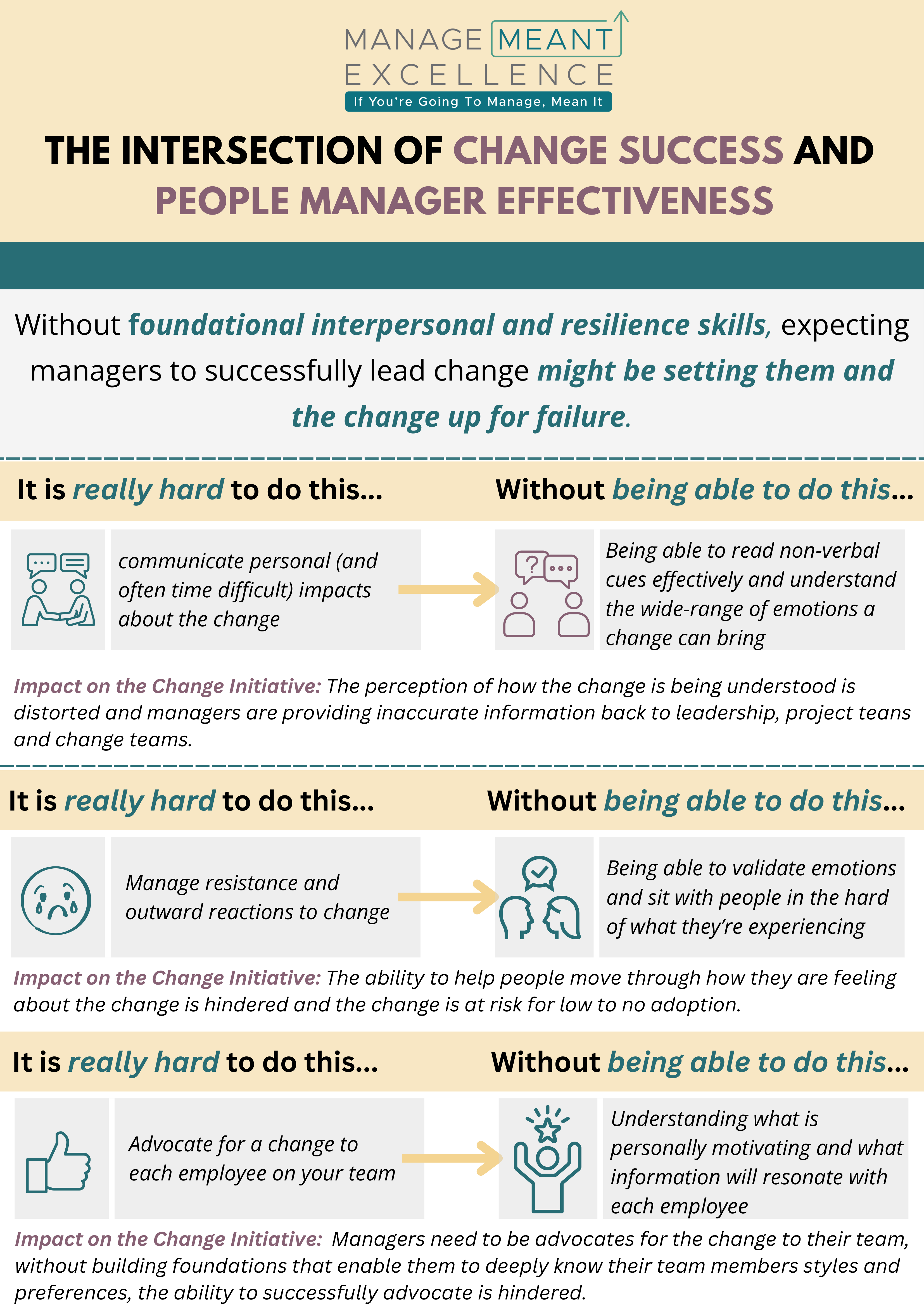
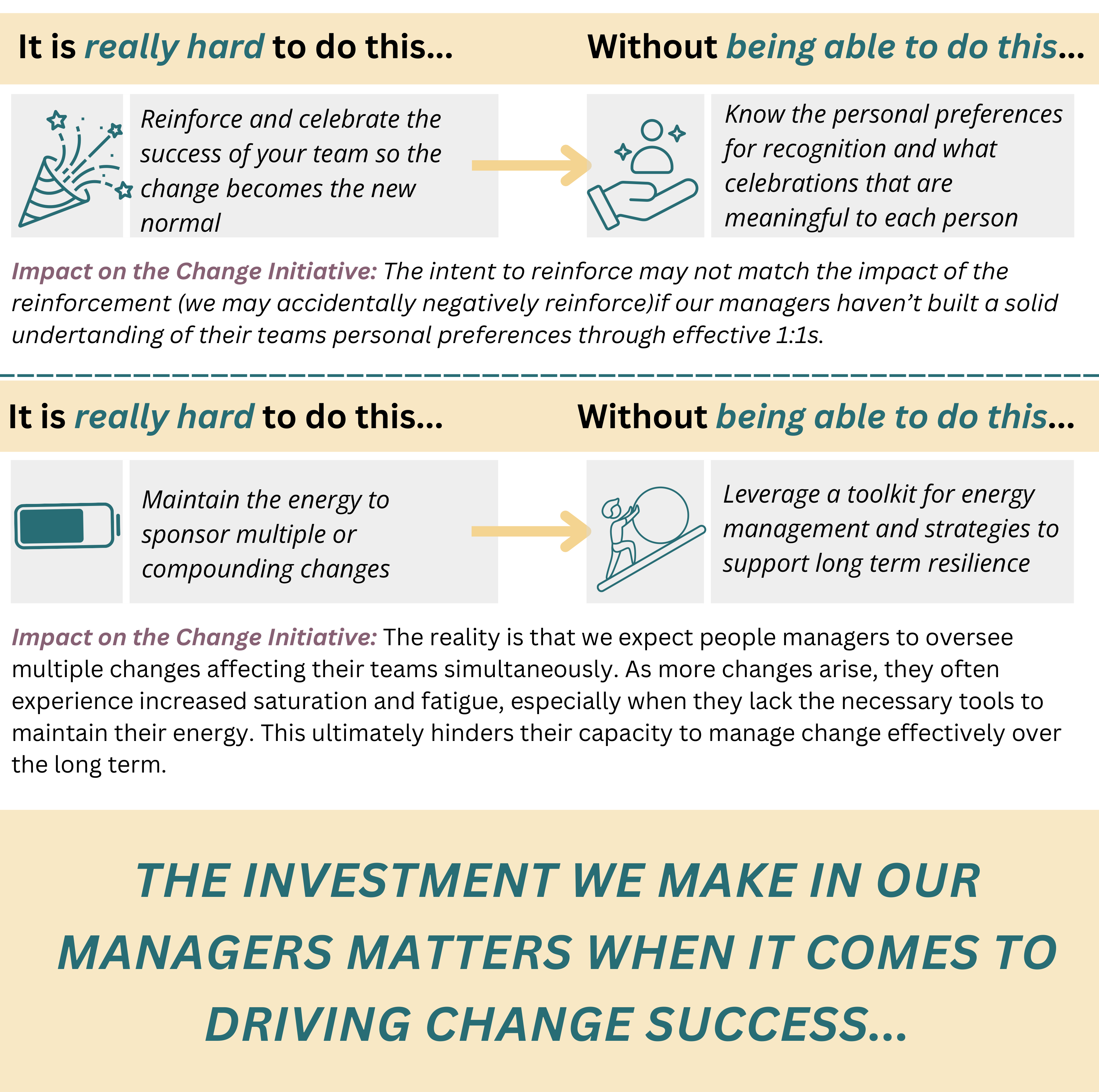
This visual breaks down something most organizations don’t say out loud:
Without foundational interpersonal and resilience skills, expecting managers to successfully lead change might be setting them — and the change — up for failure. The job isn’t just explaining change. It’s navigating everything that comes with it.
Managers are expected to:
- communicate difficult, often personal impacts
- read non-verbal cues and emotional reactions
- manage resistance in real time
- sit with people in frustration, fear, or uncertainty
- advocate for the change in a way that resonates individually
- reinforce and celebrate progress
- maintain energy across multiple overlapping changes
That’s not a communication task. That’s emotional labor.
When managers don’t have the skills or support to do that well… the impact shows up everywhere.
What actually happens:
- Messages get watered down or misinterpreted
- Resistance is avoided instead of worked through
- Employees disengage instead of adopt
- Feedback to leadership becomes inaccurate
- Reinforcement doesn’t land the way it was intended
Managers are stuck trying to navigate something they were never trained for. And it’s actually really heavy.
Here’s the shift we need to make:
Stop treating managers like messengers. Start preparing them for the hard stuff.
Because effective change doesn’t come from:
- better slide decks
- more communication plans
- more executive messaging
It comes from managers who can:
- understand their people
- respond to emotion without shutting it down
- communicate clearly — even when it’s uncomfortable
- adapt their approach to different individuals
- stay steady under pressure
And those are learned skills, not assumed ones.
This is where I see too many organizations get it wrong: they invest heavily in the change and underinvest in the people expected to deliver it.
But managers are the difference between:
- a message being heard, and a message being received and believed
- a change being announced, and a change actually being adopted
If you want better outcomes from your teams, you don’t just need better strategies. You need better-supported managers.
If you’re asking your managers to lead change — it’s worth asking: are they actually equipped to do it?
Get the newsletter.
Practical management, in your inbox.
New posts, manager resources, and the occasional honest note — no fluff, unsubscribe anytime.